
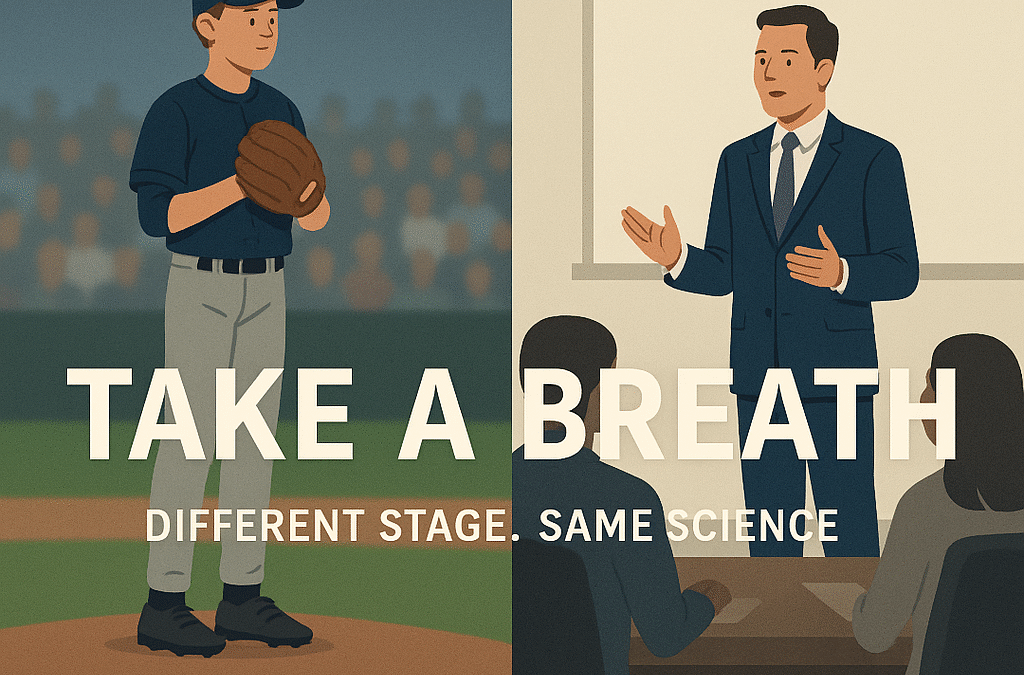
Growing up in the Susquehanna Valley, just a few miles south of Williamsport, Pennsylvania, the Little League World Series was always a central event in our region. Each summer, the excitement of teams from around the world arriving in our backyard left a lasting impact. To this day, I make a point of watching the Series, not just for the competition, but for the small moments of coaching wisdom that often surface.
One of my favorite traditions? The mound visits.
Little League mics the coaches. So, fans watching on TV can hear what they say when they walk out to the mound. For my non-baseball friends, these visits usually happen when the pitcher is in trouble…bases loaded, no outs, the pressure at its peak.
Now imagine being a 12-year-old standing on that field—14,000 fans in the stands, millions more watching on TV, and the game on the line. That’s a heavy lift for any kid’s brain to process.
This year, I noticed something remarkable. Several coaches instruct their players to take a breath. In fact, during one mound visit, the coach for Team Mexico told not just the pitcher but the entire infield to take several deep breaths together.
I don’t know if the coaches were aware, but they were giving solid coaching advice backed by neuroscience to help their players approach a challenging situation.
The Science Behind “Take a Breath”
When we face a perceived threat—whether it’s a batter with the bases loaded, a high-stakes presentation at work, someone cutting us off in heavy traffic, or even a tense moment at home—our sympathetic nervous system kicks in. Adrenaline and cortisol flood our bodies, priming us to fight, flee, or freeze. But when this response overshoots, our performance suffers.
And here’s what happens physically: when we overreact to a threat, our breathing becomes shallow and quick. We often breathe high in the chest instead of deep through our nose and diaphragm. This shallow breathing actually makes things worse—both our physical coordination and our mental clarity drop.
The reset is simple: breathe through your nose, using your diaphragm and belly rather than your chest. Your stomach should rise and fall with each breath. Aim for about 10 seconds per breath—inhale for four seconds, exhale slowly for six seconds. Within a few cycles, your heart rate lowers, your nervous system resets, and your focus sharpens. You are better prepared to deal with bases loaded, no outs.
Beyond the Field
Just as in baseball, success in work (and in life) depends on two aspects:
- Technical/Execution skills – the mechanics of pitching, parenting, coding, repairing, or presenting.
- Mental readiness – the ability to stay calm, focused, resilient, and adaptable under stress.
Too often, leaders emphasize the technical side while neglecting the mental. But without balance, the technical side falters. Research consistently shows that high performance requires both.
The coaches at Williamsport seem to understand this intuitively: when the game is on the line, the best thing you can tell your players isn’t try harder—it’s breathe.
A Leadership Lesson
In your own work and life, think of the “bases loaded” moments:
- Delivering difficult news.
- Negotiating a critical deal.
- Handling a service crisis.
- Sitting in traffic after being cut off by another driver.
- Dealing with a difficult situation at home.
In those moments, the best leaders don’t just push through…they pause, breathe, and reset. Doing so helps them perform at their best and lead their teams with clarity.
So, the next time you face pressure, remember the wisdom from the mound: take a breath.
Test